

Cupping physiotherapy

 https://gabriele-kiesling.at/


𝐃𝐞𝐫 𝐛𝐞𝐬𝐭𝐞 𝐖𝐞𝐠 𝐳𝐮 𝐇𝐞𝐢𝐥𝐮𝐧𝐠 𝐮𝐧𝐝 𝐆𝐞𝐬𝐮𝐧𝐝𝐡𝐞𝐢𝐭!🎉 Physiotherapie für zu Hause👌
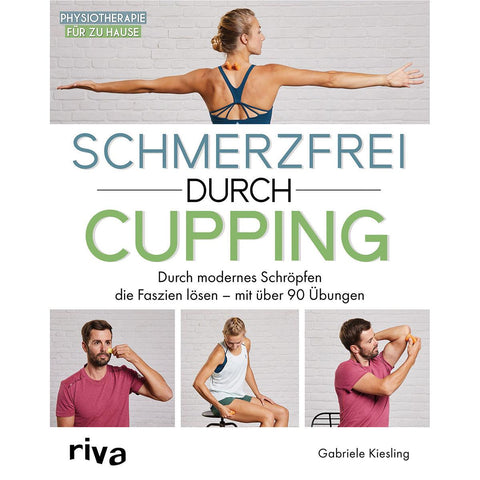
Pain-free and flexible through a new, modern form of cupping therapy? You can achieve that and much more yourself while also learning exciting expert content for your body’s health.
Cupping is much more than just cupping therapy. My idea to combine two effective therapy methods into the innovative Cupping physiotherapy has decisively revolutionized my fascia physiotherapy. Finally, changes in the fascia can be treated independently with a variety of targeted techniques – including suction, shear, or precise pressure.
The short but convincing success story of my new therapy approach combining Cupping and fascia physiotherapy is based on the experience of conventional physiotherapy and the latest knowledge from international fascia research. Significant successes have been achieved in both fields in the past. Now the best of both worlds can be combined with my empirical application experience. I myself have already achieved numerous successes with it. Especially the combination of my decades-proven physiotherapy exercise concept and the fascia physiotherapy I developed can now show you an effective way to successfully self-treat your body for many complaints.

Experts like Dr. Robert Schleip, Director of the Fascia Research Group at the University of Ulm, are also convinced. Dr. Schleip once described the combination treatment with the innovative silicone Cups as, in his eyes, »one of the most interesting and promising myofascial treatment methods« he knows.

»WOHLWEH HELPS HEAL«
Fascia deserve our full attention. A central insight of this approach is the well-pain. Fascia should be treated carefully and with respect. They are branches of our brain. This knowledge was already postulated by the healer Andrew Still, to whom this groundbreaking insight goes back. He was one of the pioneers who co-founded osteopathy as early as 1899, and his statement remains valid to this day.
However, I do not consider all recommendations of fascia therapy to be sensible. In recent years, extremely painful fascia rolling therapies and very strong manual treatment forms have emerged. In my opinion, these are not particularly helpful. Pain always means stress for the fascia. And stress is the main cause of fascial changes. Therefore, pain must be avoided at all costs.
My motto is: "Well-pain helps heal." That means the pain must be felt, but only as strong as necessary. Because exactly the sensation of "well-pain" makes it clear to you during self-treatment: Here is exactly the right spot, the epicenter of my complaints. Once this well-pain area is found, healing can begin. On a pain scale from 1 (almost painless) to 10 (very severe), the well-pain is at most 3. This central sensation regulates the fascial structures, expands your range of motion, and quickly breaks down misregulations, such as incorrect movement patterns. This makes your body noticeably light and supple. That is your goal with Cupping physiotherapy!
FASCIA ARE SMARTER THAN YOU THINK
Fascia are smart. With over 100 million sensors, they detect everything that affects our body very well. Fascia are like our sixth sense, equipped with pain sensitivity, movement control receptors, and deep sensitivity. These are important for an appropriate physical response to disturbances. Cupping plus physiotherapy is the modern, practical method of fascia self-treatment. I want to show you exactly how the procedure works so that you can use it and benefit from it sustainably.
With this method, you thus have a novel, selected, tested, contemporary, and goal-oriented self-treatment method, free from trendy fads, based on qualified physiotherapeutic expertise and modern fascia science. You have both theoretical and practical support for self-treatment at hand. But in everything you do, always remain self-critical, because of course, in case of doubt, this does not replace a doctor's visit or targeted, individual physiotherapy.
Wishing you much success on your very personal path to healing and health!
The Cupping physiotherapy
Here Cupping physiotherapy works particularly effectively and targeted

The best Cupping techniques
I have often been asked what exactly happens under the skin during Cupping. Here you see simplified illustrations of tissue changes caused by pressure, shear, and suction, so you can better imagine how the Cups work.

From the many application possibilities with the Cups, I have selected the best and described them for you in a way that is easy to implement. You can recognize which techniques are best applied in the respective exercises by the icons next to the exercise name in my book:
EXPERT TIP
- Fascia is our most important sensory organ, the so-called sixth sense.
- More than 100 million fascia sensors have already been discovered and scientifically recognized.
- Fascia has a very special architecture made of collagenous and elastic components.
- The average weight of fascia in a 60-kilogram person is 20 kilograms. So they make up about one third of our body weight.
- Fascia surrounds us completely, like a diving suit. Externally and internally, it also runs through the organs and the brain, bones, muscles, and many other areas.
- Fascia does not like stress.
- They love alkaline-rich nutrition.
- Fascia can regenerate within seven months
More books and sets by and with Gabi Kiesling


